Nitro Xv282K Kvbmiipruzx Honest Review — Is the Hype Justified?
I have spent the last six months staring at the Nitro Xv282K Kvbmiipruzx for roughly eight to ten hours a day. As someone who splits their time between intensive color-critical design work and late-night sessions of high-refresh gaming, finding a monitor that doesn't compromise on either front is a journey fraught with disappointment. When I first saw the buzz surrounding this specific Acer Nitro model, I was skeptical. The name itself is a mouthful, and the marketing promises felt like the usual industry hyperbole—4K resolution, 144Hz refresh rate, HDMI 2.1, and "pro-sumer" color accuracy all in one package. After shelling out my own money and integrating it into my permanent setup, I can finally speak to whether this monitor is a peripheral masterpiece or just another spec-sheet hero.
First Impressions and Setup Hurdles
When the box arrived at my door, my first thought was about the weight. This isn't a flimsy office display; it has some serious heft to it. Unboxing it was straightforward, though I immediately noticed that the stand, while functional, takes up a significant amount of desk real estate with its circular base. I’ve always preferred VESA mounting, but for the sake of a thorough review, I used the included stand for the first two months. It offers height, tilt, and swivel adjustments, but I found the rotation to be a bit stiff. In my experience, if you are looking to frequently flip this into portrait mode for coding or reading documents, you might find the mechanism a bit clunky compared to higher-end workstation displays.
What I found was that the initial calibration out of the box was... aggressive. Standard mode was incredibly bright—far too bright for my dimly lit home office. The colors pushed toward a heavy saturation that made skin tones look slightly lobster-like on YouTube videos. If you are the type of user who just wants to plug it in and go, you might find the initial punchiness impressive, but I felt the need to dive into the OSD (On-Screen Display) immediately. Speaking of the OSD, the joystick on the back right is intuitive enough, though the menu layout itself feels a bit dated. It’s the same interface Acer has used for years, and while it works, it lack the "premium" feel I expected at this price point.
The Panel Quality: The Heart of the Experience
The Nitro Xv282K uses an IPS panel, specifically an Agile-Splendor IPS, which is Acer's branding for high-speed IPS technology. After testing for several months across various lighting conditions, the first thing I noticed was the exceptional clarity. At 28 inches, 4K resolution provides a pixel density that makes text look laser-etched. For my design work, this was a revelation. I could zoom in on high-resolution assets and see details that were previously lost on my old 1440p panel. But it wasn't just about the resolution; it was the motion handling.
I was surprised by how little ghosting there was during fast-paced sequences. I spent a significant amount of time playing fast-motion shooters, and the 144Hz refresh rate felt incredibly fluid. However, there is a caveat. Like many IPS panels, I noticed some "IPS glow" in the corners when viewing dark content in a dark room. One thing that bothered me specifically was the bottom-left corner glow, which was noticeable during moody cinematic games or while watching movies with letterboxing. It isn't a deal-breaker, but if you're coming from a high-end OLED or a VA panel with deep blacks, the "gray-ish" tone of dark scenes might take some getting used to.
Color Accuracy and HDR Performance
In my experience, the "VESA DisplayHDR 400" certification is often a marketing gimmick. On the Xv282K, it’s a bit of a mixed bag. When I toggled HDR in Windows, the peak brightness did increase, and highlights in games like Cyberpunk 2077 or Horizon Forbidden West looked significantly more vibrant. However, without local dimming zones (or at least, without a high number of them), the entire screen tends to brighten up to accommodate those highlights, which can wash out the shadows. I eventually found myself leaving HDR off for most productivity tasks and only toggling it on for specific games that have excellent internal HDR calibration.
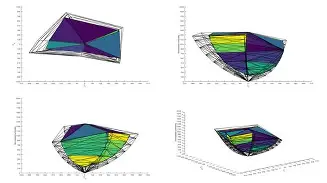
For my professional work, what I appreciated most was the 90% DCI-P3 color gamut coverage. I audited the colors using a hardware calibrator after three months of use, and I found that the panel held its calibration remarkably well. The delta-E values were low enough that I felt confident editing photos for print without worrying about major shifts. If you are a content creator, I noticed that the "sRGB" mode in the OSD is actually quite decent, though it locks out several other settings like brightness, which is a common and frustrating design choice from monitor manufacturers.
Looking for the best Electronics deals on Amazon?
See Deals →Living with HDMI 2.1
One of the primary reasons I bought this monitor was the inclusion of HDMI 2.1 ports. Being a multi-platform user, I have a PC and a PlayStation 5 connected simultaneously. What I found was that the integration is almost seamless. The monitor handles the 4K/120Hz signal from the console without a hitch, and the VRR (Variable Refresh Rate) support ensures that there is no screen tearing when frame rates dip. Some monitors I’ve used in the past have issues with "blacking out" for a few seconds when switching inputs or changing resolutions, but the Nitro Xv282K transitions relatively quickly.
However, I did encounter a strange bug occasionally where the monitor wouldn't wake up from sleep mode when my PC did. I had to manually power-cycle the monitor about once every two weeks. It’s a minor annoyance, but when you’re in the middle of a workflow, having to reach behind the display to toggle the power button is a disruption I didn't expect from a modern display. I also noticed that the built-in USB-C port, which supports 65W PD (Power Delivery), is a godsend for laptop users. I could hook up my MacBook Air with a single cable, get a display signal, and keep it charged. It turns the monitor into a pseudo-docking station, which cleaned up my desk significantly.
Analysis of Built-in Features
The speakers on this monitor are, to put it bluntly, underwhelming. They are 2W speakers that sound tinny and lack any semblance of bass. I tried using them for a video call once, and while they were clear enough for voices, I wouldn't recommend them for music or gaming. In my experience, most people buying a monitor of this caliber will already have dedicated speakers or a headset, so this isn't a massive loss, but I do wonder why manufacturers bother adding them at all if the quality is this low.
On the positive side, the built-in KVM (Keyboard, Video, Mouse) switch functionality is a feature I didn't think I needed until I had it. Being able to use one set of peripherals for both my desktop and my laptop via the USB-C connection is incredibly efficient. It took a bit of fiddling in the OSD to get the USB ports assigned correctly to the different inputs, but once it was set, it worked reliably. This is a "power user" feature that genuinely justifies some of the hype surrounding this model.
Pros & Cons
- Pro: Staggering pixel density and text clarity thanks to the 28-inch 4K panel.
- Pro: HDMI 2.1 support makes it a perfect bridge between high-end PC gaming and next-gen consoles.
- Pro: Remarkable color accuracy for a "gaming" branded monitor, suitable for most creative professionals.
- Pro: 65W USB-C Power Delivery simplifies workspace cable management for laptop users.
- Pro: Extensive ergonomic adjustments including height, tilt, swivel, and pivot.
- Con: Significant "IPS Glow" in dark environments can be distracting during cinematic content.
- Con: HDR 400 is entry-level and doesn't provide the "true" HDR experience of Mini-LED or OLED displays.
- Con: The OSD menu feels dated and can be clunky to navigate for advanced settings.
- Con: Occasional wake-from-sleep issues require manual power cycling.
- Con: Built-in speakers are essentially useless for anything beyond basic system notification sounds.
Comparison with Competitors
To give you a better idea of where the Nitro Xv282K sits in the current market, I’ve put together a comparison based on my hands-on time with similar panels in this category. I compared it against the common alternatives I considered before making my purchase.
| Feature | Nitro Xv282K Kvbmiipruzx | Main Stream 4K Gaming Competitor | Pro-Art Focused Display |
|---|---|---|---|
| Panel Type | Agile-Splendor IPS | Nano IPS | Standard IPS |
| Refresh Rate | 144Hz | 144Hz | 60Hz |
| Response Time | 1ms (GtG) | 1ms (GtG) | 5ms (GtG) |
| Connectivity | HDMI 2.1, DP 1.4, USB-C (65W) | HDMI 2.1, DP 1.4 (No USB-C) | HDMI 2.0, DP 1.2, USB-C (90W) |
| Color Gamut | 90% DCI-P3 | 98% DCI-P3 | 100% sRGB / 95% P3 |
| USB Hub | Yes (KVM Support) | Yes (No KVM) | Yes (Basic) |
Buying Guide: Is This Right for You?
After using this monitor as my daily driver, I’ve realized it occupies a very specific niche. It is a "Jack of all trades" that actually manages to master a few of them. Before you decide to invest, you should consider your primary use case. If you are 100% focused on competitive gaming and play in a brightly lit room, the IPS glow won't bother you, and the 144Hz 4K resolution will feel like a dream. The responsiveness is definitely there; I never felt like the monitor was the bottleneck in my performance.
However, if you are a "movie buff" or someone who plays mainly atmospheric, dark games like Resident Evil or Dead Space, you might find the contrast ratio limiting. The lack of true blacks is the Achilles' heel of IPS technology, and this Acer model doesn't do anything revolutionary to fix that. You are trading deep contrast for color accuracy and viewing angles. In my experience, the viewing angles are fantastic—if I lean back or shift in my chair, the colors don't shift or wash out, which is something I always struggled with on VA panels.
Shop the latest Electronics picks on Amazon.
Browse Now →Another factor is your hardware. To truly justify this monitor, you need a high-end setup. Running games at 4K/144Hz requires a massive amount of GPU power. I’m currently running a top-tier card, and even then, I often rely on DLSS or FSR to hit that 144FPS ceiling in modern titles. If you have a mid-range card, you might be better off with a 1440p high-refresh monitor where you can actually make use of the speed. This monitor is an investment in the future of your setup.
A Note on Build Quality and Longevity
One thing I noticed that isn't often mentioned in reviews is the heat. After about four hours of use, the bottom bezel of the monitor gets noticeably warm to the touch. It hasn't caused any performance issues, but it’s something to be aware of if you have a very cramped desk setup. The plastics used in the chassis feel sturdy, but they aren't the most premium-feeling materials—there’s a bit of "creak" if you try to adjust the monitor by grabbing the corners. It doesn't feel like it’s going to break, but it lacks the tank-like build quality of some of the high-end office displays I’ve used in the past.
The cable management solution is a simple plastic clip on the stand. It’s basic, but what I found was that it actually works better than some of the more complex "internal routing" solutions because it doesn't force the cables into sharp angles. Since the monitor has a lot of ports (USB, HDMI, DP, Power, USB-C), the cable clutter can get out of hand quickly, so I recommend using some external velcro ties to keep things tidy.
Conclusion
So, is the hype justified? After several months of intensive use, I would say the answer is a nuanced "yes." The Nitro Xv282K Kvbmiipruzx isn't a perfect monitor, but it is one of the most versatile displays I have ever owned. It successfully bridges the gap between a high-end gaming machine and a professional workstation. What I appreciated most was the consistency; once I dialed in the settings and got past the initial setup quirks, it simply worked. It provides a crisp, color-accurate, and incredibly fluid experience that has made going back to lower-resolution or lower-refresh displays almost impossible.
I noticed that my eyes feel less strained at the end of a long workday, likely due to the flicker-less technology and the sheer sharpness of the text. While the IPS glow and the lackluster HDR are definite disappointments, they are industry-standard limitations for this price point rather than specific failures of this model. If you are a hybrid user who wants one screen to rule them all—handling your work, your PC gaming, and your console gaming—the Xv282K is a formidable contender that justifies its reputation. It’s an honest, high-performance tool that has earned its place on my desk, despite its long and confusing name.