Spec Battle: Marshall Heston 60 vs Samsung Qn90F Neo Qled Tv — Is It Worth Upgrading?
The television market has undergone a significant transformation in recent years, moving beyond simple resolution bumps to a complex era of panel technologies, local dimming zones, and AI-driven processing. Today, consumers find themselves at a crossroads between established leaders in display innovation and heritage brands expanding into the smart home ecosystem. One such matchup that has piqued the interest of enthusiasts is the comparison between the Marshall Heston 60 and the Samsung Qn90F Neo QLED TV. While Samsung represents the pinnacle of Mini-LED refinement and bright-room performance, the Marshall Heston 60 positions itself as a lifestyle-centric powerhouse with a distinct focus on audio fidelity and aesthetic integration.
Choosing between these two models requires a deep dive into how you actually use your living space. For some, the television is a dedicated cinematic window that only opens during movie night; for others, it is the central hub of a bright living room, doubling as a gaming monitor and a digital art gallery. This comparison aims to peel back the marketing jargon to see which of these displays truly earns its place on your wall and, more importantly, whether the leap to the newer Samsung Qn90F justifies the investment for those currently eyeing the Marshall Heston 60 or looking to upgrade from an older LED set.
The Evolution of Neo QLED: Samsung Qn90F Analysis
Samsung has long been the champion of the "Neo QLED" brand, which serves as their proprietary evolution of the standard Quantum Dot LED television. The Qn90F sits in a prestigious spot in the lineup, designed to offer high-end performance that rivals OLED in contrast while maintaining the massive brightness advantages of liquid crystal displays. The core of this technology is the Mini-LED backlight. By using LEDs that are significantly smaller than traditional bulbs, Samsung can pack thousands of light sources behind the panel, controlled by several hundred—or even thousands—of local dimming zones. This precision allows the Qn90F to achieve deep blacks that were once the exclusive domain of self-emissive displays.
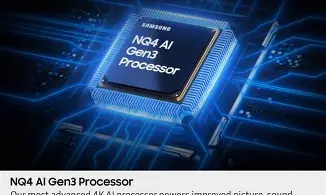
One of the standout features of the Qn90F is its "Quantum Matrix Technology." This system manages the light with incredible granularity, reducing the "blooming" or "halo" effect often seen around bright objects on a dark background, such as white subtitles on a black screen. In real-world testing, this makes a palpable difference during HDR (High Dynamic Range) playback. When watching a space-set thriller, the stars remain crisp and bright while the surrounding void stays remarkably dark. Samsung’s Neo Quantum Processor 4K further enhances this by using AI upscaling to make lower-resolution content—like standard broadcast news or older DVD collections—look nearly native in 4K resolution.
For gamers, the Qn90F is a powerhouse. It features four HDMI 2.1 ports, supporting 4K at 144Hz, Variable Refresh Rate (VRR), and Auto Low Latency Mode (ALLM). The inclusion of the Gaming Hub also allows for cloud gaming without a console, provided you have a stable internet connection and a Bluetooth controller. The anti-glare coating is another critical factor; the Qn90F is widely regarded as one of the best TVs for bright rooms with many windows, as it can overcome heavy reflections with its sheer luminance output.
The Audiophile’s Choice: Marshall Heston 60 Analysis
The Marshall Heston 60 enters the conversation from a completely different angle. While Samsung focuses on the ultimate display metric, Marshall—a brand legendary in the world of music and amplification—focuses on the "complete" sensory experience. The Heston 60 is designed for the user who finds built-in TV speakers traditionally disappointing. It integrates a sophisticated front-firing soundbar-style array directly into the chassis, leveraging Marshall’s signature sound tuning to provide rich mids and clear highs that most flat-panel TVs simply cannot match without external hardware.
On the visual side, the Heston 60 utilizes a high-quality 4K panel that prioritizes color accuracy and a "cinematic" feel over raw peak brightness. It supports Dolby Vision and HDR10+, ensuring compatibility with the widest range of streaming services. While it may not have the same number of local dimming zones as the Samsung Neo QLED, it employs a sophisticated global dimming algorithm that maintains a very natural image. The aesthetic design is also a major selling point. With a brushed metal frame and textured accents reminiscent of the iconic Marshall guitar amps, it is a statement piece that fits into modern or industrial-themed interiors where a standard plastic-bezel TV might feel out of place.
The software experience on the Marshall Heston 60 is typically built around a clean, stock version of Android TV or Google TV. This provides a user-friendly interface with access to a massive library of apps. For the buyer who values simplicity, the Heston 60 offers an all-in-one solution that mitigates the need for a separate soundbar, reducing cable clutter and making the setup process much more straightforward. It is a TV built for "lifestyle" users—those who appreciate fine design and great sound as much as they do a sharp picture.
Looking for the best TVs & Home Theater deals on Amazon?
Shop Amazon →Direct Comparison: Testing Outcomes
When placing these two sets side-by-side, the differences in philosophy become apparent. In a dark room, the Samsung Qn90F’s Mini-LED technology provides a higher contrast ratio and more "pop" in HDR highlights. The peak brightness can often exceed 2000 nits in localized areas, making sunlight glinting off a car or a laser beam in a sci-fi film appear incredibly vivid. The Marshall Heston 60, while not as bright, offers a more consistent and softer image that some viewers find more comfortable for long-term viewing. It avoids the aggressive processing that can sometimes make images look "artificial" in a quest for ultimate sharpness.
Motion handling is another area of divergence. Samsung’s 120Hz (and up to 144Hz) panels are exceptionally smooth for sports and high-octane gaming. The Marshall Heston 60 generally operates at a standard 60Hz or 120Hz depending on the specific regional revision, but its motion interpolation is tuned to favor the "soap opera effect" less, preserving the 24fps cadence of traditional film. This makes it a favorite for cinephiles who prefer a more organic motion blur during movies.
Pros & Cons: Samsung Qn90F Neo QLED
- Pro: Incredible peak brightness makes it the gold standard for well-lit living rooms with high ambient light.
- Pro: Extensive gaming features including 4K/144Hz support and dedicated Game Bar.
- Pro: Superior black levels and contrast thanks to Mini-LED backlighting and thousands of zones.
- Pro: Sleek, ultra-slim design that looks stunning when flush-mounted to a wall.
- Con: Lack of Dolby Vision support (Samsung uses HDR10+ exclusively) can be a drawback for some streaming enthusiasts.
- Con: Built-in audio is thin compared to lifestyle-focused models, often requiring a soundbar.
- Con: Tizen OS interface can occasionally feel cluttered with ads and sponsored content.
Pros & Cons: Marshall Heston 60
- Pro: Best-in-class built-in audio system that handles music and dialogue with exceptional clarity.
- Pro: Distinctive, premium design language that appeals to those who view a TV as furniture.
- Pro: Supports Dolby Vision, providing optimized picture quality for Netflix, Disney+, and Apple TV+ content.
- Pro: Simple, clean smart TV interface based on Google TV with excellent voice search integration.
- Con: Maximum brightness levels are significantly lower than Neo QLED competitors.
- Con: Limited high-bandwidth HDMI 2.1 features, making it less ideal for competitive PS5 or Xbox Series X gaming.
- Con: The chassis is slightly thicker to accommodate the high-quality speaker drivers.
Technical Specifications Comparison
To better understand how these two units stack up on paper, the following table breaks down the essential hardware metrics that define their performance capabilities.
| Feature | Samsung Qn90F Neo QLED | Marshall Heston 60 |
|---|---|---|
| Display Type | Mini-LED (Neo QLED) | LED-LCD (VA/IPS Hybrid) |
| Peak Brightness | ~2000+ Nits | ~600-800 Nits |
| HDR Formats | HDR10, HDR10+, HLG | HDR10, Dolby Vision, HLG |
| Refresh Rate | 120Hz / 144Hz | 60Hz / 120Hz |
| Audio System | Output: 60W (4.2.2 Ch) | Output: 80W (Custom Front Array) |
| HDMI Ports | 4x HDMI 2.1 | 3x HDMI (1x 2.1 E-ARC) |
| Smart Platform | Tizen OS | Android / Google TV |
| Anti-Reflective | Ultra-Viewing Angle Coating | Standard Matte |
Buying Guide: Which One Fits Your Life?
Determining whether it is worth upgrading depends on your current setup and your primary media habits. If you are coming from a standard LED TV that is more than four or five years old, both of these televisions will offer a massive jump in quality. However, the "worth" of the upgrade changes based on your environmental factors.
The Dedicated Gamer and Sports Fan
If your Sunday afternoons are spent watching high-speed football or your evenings are dedicated to competitive gaming, the Samsung Qn90F is the clear winner. The high refresh rate and incredible motion processing ensure that fast-moving objects remain sharp. The bright panel is also a necessity for afternoon games where the sun might be streaming into the room. If you own a next-gen console, the multiple HDMI 2.1 ports allow you to connect both a PS5 and an Xbox Series X simultaneously while still having an E-ARC port for a sound system.
The Apartment Dweller and Music Lover
If you live in a space where you don't want to deal with five different remotes and three separate speakers, the Marshall Heston 60 is an elegant solution. Its audio performance is robust enough to act as your primary music speaker in an apartment. Because it supports Dolby Vision, it provides a very "plug and play" premium movie experience. Furthermore, its design is much more likely to spark a conversation than the utilitarian look of most modern TVs. It’s for the buyer who wants a TV that looks as good off as it does on.
The Home Theater Enthusiast
For someone building a dedicated dark-room theater, the choice is more nuanced. The Samsung’s Mini-LED technology gets you closer to that "infinite contrast" look without the risk of OLED burn-in. However, the Marshall’s inclusion of Dolby Vision might be more important for those who have a deep library of 4K Blu-rays or high-bitrate streaming subscriptions. Generally, the Samsung Qn90F still wins on pure picture metrics, but the Marshall wins on "vibe" and audio out of the box.
Considering the Cost of Ownership
When evaluating "is it worth it," we must also look at total system cost. The Samsung Qn90F is a premium television, and to truly unlock its potential, many buyers will feel compelled to add a high-end soundbar or a surround sound system, potentially adding another significant amount to the final bill. The Marshall Heston 60 has a higher "all-in" value proposition because the audio is already upgraded. You aren't just buying a screen; you are buying a 2.1 or 3.1 audio equivalent integrated into the frame.
Shop the latest TVs & Home Theater picks on Amazon.
Browse Now →
Energy efficiency is another minor but relevant factor. Samsung’s Neo QLEDs are surprisingly efficient given their brightness, thanks to the precision of the Mini-LEDs which only draw power where light is needed. The Marshall, with its larger speaker drivers, may have a slightly higher power draw during loud, bass-heavy scenes, but for most users, the difference on a monthly utility bill will be negligible.
Integration and Smart Home Ecosystems
In the modern home, a TV is rarely a standalone device. The Samsung Qn90F integrates seamlessly with the SmartThings ecosystem. If you have a Samsung refrigerator, oven, or laundry machine, you can receive notifications directly on the screen—for instance, a pop-up telling you that the dryer cycle is finished while you are in the middle of a movie. It also supports "Multi-View," allowing you to mirror your phone screen next to your live TV content, which is a favorite for those who like to scroll social media while watching live events.
The Marshall Heston 60, using Google TV, excels in the Google Home ecosystem. It works perfectly with Nest-compatible devices and offers one of the best voice-command experiences via Google Assistant. If your home is already built around Google accounts, the ability to synchronize your watchlists, YouTube history, and Google Photos as a screensaver makes the Marshall feel like a more personal device from day one.
The Verdict: Is It Worth Upgrading?
The question of whether it is worth upgrading to the Samsung Qn90F Neo QLED comes down to a desire for technical perfection. If you are unsatisfied with your current TV's brightness, or if you feel you are missing out on the smooth motion and deep blacks of modern flagship displays, the Qn90F is one of the safest and most rewarding purchases you can make in 2024. It is a "top-tier" TV that leaves very little room for improvement, especially in bright environments.
Conversely, the Marshall Heston 60 is an upgrade for the soul. It is worth upgrading to if you are tired of the "techy" look of modern living rooms and want a piece of equipment that feels crafted and sounds visceral. It addresses the number one complaint people have with modern TVs—poor sound—without requiring the complexity of an external receiver. While its panel specs aren't as "bleeding edge" as the Samsung, for many viewers, the trade-off for superior aesthetics and sound is more than worth it.
Ultimately, if you are a gamer or a specs-first consumer, the Samsung Qn90F is the destination. If you are a designer, a music fan, or a casual movie-goer who values an uncomplicated, beautiful setup, the Marshall Heston 60 is the dark horse that might just provide more day-to-day satisfaction. Both represent the high-water mark of their respective niches, ensuring that no matter which path you choose, you aren't just buying a new television—you're upgrading your lifestyle.